
Part of our Card Ideas and Sentiments guides.
If someone you care about is going through something hard and you are holding a blank card, here is the short answer: tell them you know, tell them you are here, and do not try to fix it. Three sentences is plenty. Below are the words that work for the situations people ask us about most (a diagnosis, a layoff, a divorce, the long stretch where nothing is technically wrong), what to leave out, and how to match the message to the person. Every sentiment quoted on this page is printed on a red rubber stamp we make here in Minnesota, word for word as it stamps. If you are writing to someone after a death, our guide to what to write in a sympathy card covers that.
What to write when you have no idea what to say
Most people get stuck because they think the card needs to say something wise. It does not. The person on the other end is not grading you. They will read it once at the kitchen table, and what they will remember is that you noticed.
A formula that works almost every time:
- Name that it is hard, without describing it. "I heard, and I'm so sorry."
- Say you are thinking about them.
- Say you are here, and mean something specific by it.
- Sign off warmly.

A Little Not Fine
The most useful sentiment for this is two words long. A Little Not Fine, our bestselling get well set, has a small stamp that says "i'm here". Put it in the middle of a card front with plenty of white space and you have said the thing. Write one or two lines inside and stop.

Love Stays, No Matter What
If you want the stamp to carry more, Love Stays, No Matter What has "You don't have to say a word, I know this is hard, and I'm here". That line does something useful: it takes away the pressure to write back. People in the middle of treatment or a crisis often feel they owe everyone a reply. Telling them they don't is a gift.
Who this is for: anyone you care about, when you have heard the news and the blank card has been sitting on your desk for two days.
The thing that matters more than finding the right words
Sending the card. The card you mail on Tuesday with an imperfect sentence does more good than the perfect one you never send.
Second to that: offer something specific. "Let me know if you need anything" hands the work back to the person who is struggling, and almost nobody takes you up on it. "I'm dropping off soup Thursday, I'll leave it on the porch" gets a yes.

Purr-Fect Time
Purr-Fect Time has a sentiment built around exactly this move: "It seems like the purr-fect time to ask if you need help". Stamp it on the front, then write the real offer inside. Mow the lawn. Drive to one appointment. Take the kids Saturday afternoon. Pick one thing you will actually do, and do it.
Who this is for: the neighbor, the coworker, the friend from church. Anyone for whom one small, real offer will mean more than a big feeling.
First decide: does this person want softness, or want to be treated normally?
This is the decision that makes or breaks the card, and hardly anyone talks about it.
Some people, when life is hard, want tenderness. They want to hear that it is fine to fall apart. Other people are drowning in tenderness. Everyone around them has switched to the hushed voice, and what they want most is one person who talks to them like they are still themselves. Think about how this person talks on a normal day. Do they tease? Swear? Send you memes at midnight? Then a card full of soft language may read as one more reminder that they have become a patient.

You Don't Have to Be OK
For the tender side, our In the Light line was written for exactly this. You Don't Have to Be OK includes "You don't have to be okay to be loved", which may be the kindest sentence you can hand someone who is worn out from pretending.

A Little Not Fine
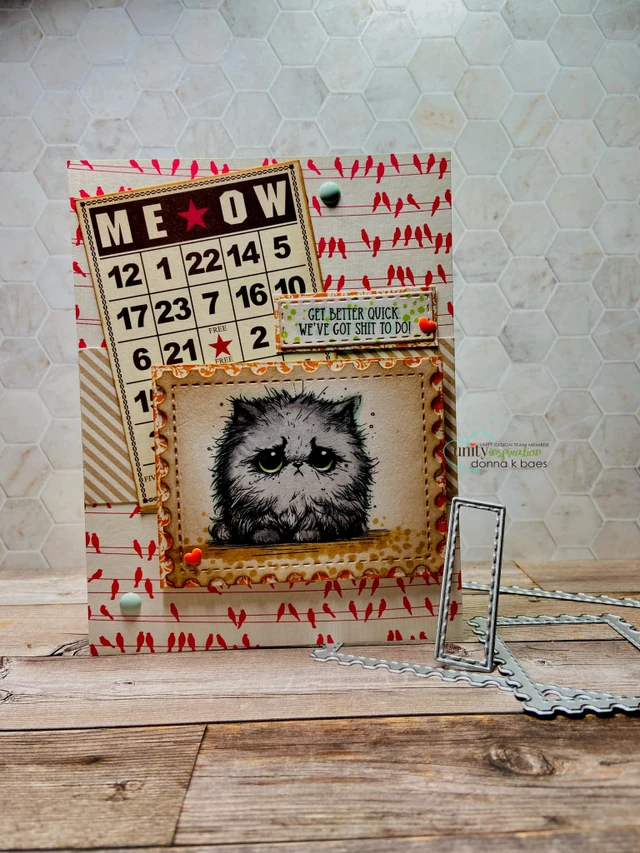
For the normal side, A Little Not Fine has "Get better quick. We've got shit to do". Sent to the right friend, that line says: you are still you, I still need you, this is temporary. Sent to the wrong person it is a mistake, so know who you are writing to.
The Little High Road
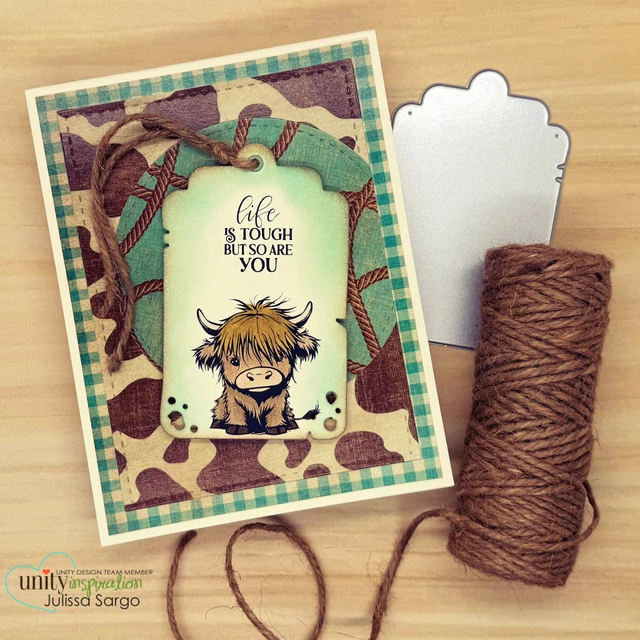
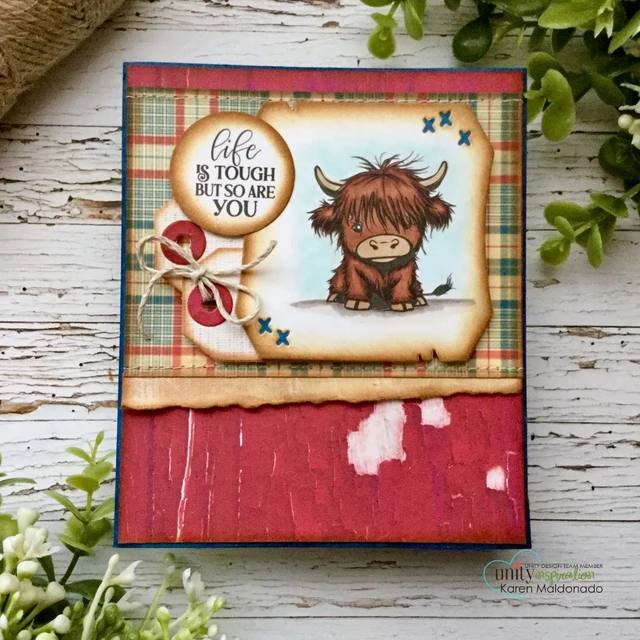
The middle ground, which suits almost anyone, is The Little High Road: one Highland calf and one line, "life is tough but so are you". It is the bestselling set in our Encouragement stamps, and it is easy to see why. It admits the hard thing and pays the person a compliment in the same breath, with no sap.
If you truly cannot tell which way someone leans, lean gentle and keep it short.
What not to write, and why the silver lining lands so badly
When someone is hurting, the instinct is to point at the bright side. At least they caught it early. At least you still have your health. It will all work out. It comes from a good place, and it almost always lands wrong, because it tells the person their feelings are a problem to be solved.
Leave these out:
- Anything that starts with "at least."
- Stories about someone else who had the same thing, especially if it ended badly.
- Advice: diets, supplements, doctors, books.
- "Stay positive." They are allowed not to be.
- Questions that need an answer. How did it happen? What did the doctor say?
- "Let me know if you need anything" on its own, with no real offer attached.

Ruff. Ruff. Ruff.
What to write instead is permission. Ruff. Ruff. Ruff. carries the plainest version of it: "It's okay to not be okay". And You Don't Have to Be OK has a line for the person whose whole job right now is getting through the day: "Some days, survival is the victory. And that is enough".
Neither of those tries to fix anything. That is why they work.
Short messages, for when you are afraid of saying too much
Short is not lazy. In a lot of hard situations short is exactly right. These stamp small and say plenty:
- "consider this a hug" (A Little Ruffled)
- "i'm here" (A Little Not Fine)
- "I feel for you" (Flock Talk)
- "sending brighter days" (Joy and Brighter Days)
- "Some days require extra hugs" (Say It With Love)
- "sorry stuff stinks" (Sorry Stuff Stinks)
- "Keep looking up" (Look Up Pup)
A short sentiment on the front leaves room inside for one handwritten sentence, and that sentence is the part they will reread. "I think of you every morning when I drive past your street." Something only you could have written.
Who this is for: the acquaintance, the coworker you like but do not know well, the friend of a friend. And, less obviously, your very closest people, who do not need a speech from you.
When you know something is wrong but not what
You heard it secondhand. Or they have gone quiet. Or they posted something vague and deleted it an hour later. You want to reach out without prying, and without guessing out loud.
The rule: acknowledge, don't diagnose. Say you have been thinking about them. Do not name what you think happened.
Feeling Off
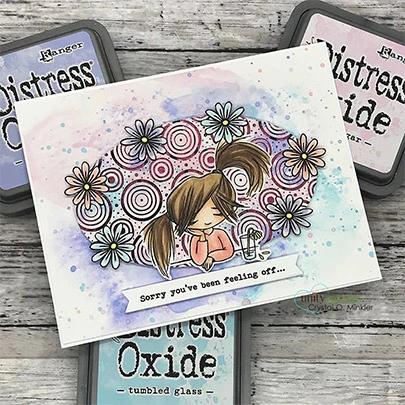
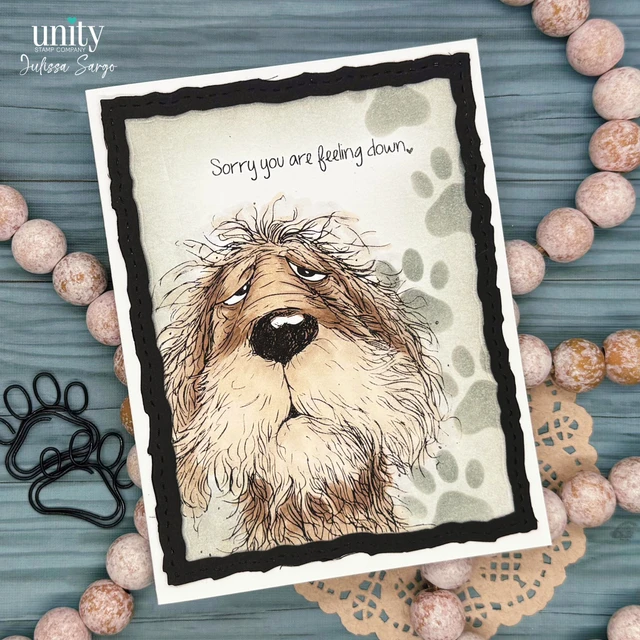
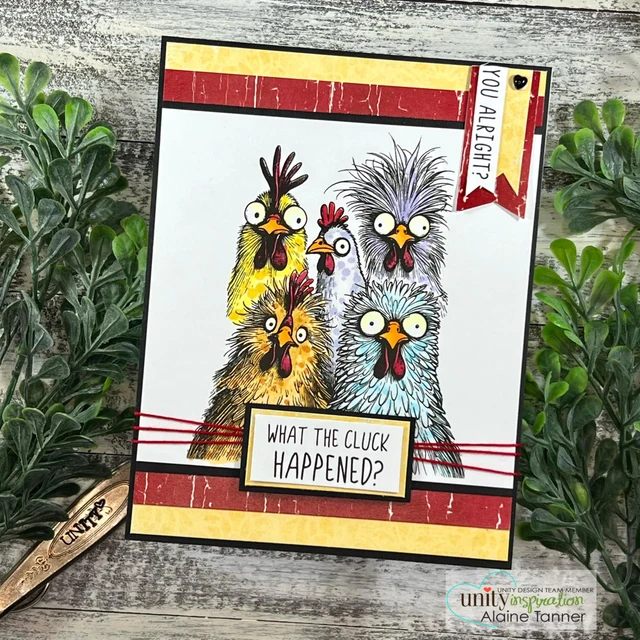
Feeling Off was made for this: "Sorry you've been feeling off..." The trailing dots matter. They leave the door open without pushing on it. Slightly Wry has a close cousin: "Sorry you are feeling down". And Cuckoo, one of our bestselling get well sets, has a two word question that works on the front of a card to someone you have not heard from in a while: "You Alright?" There are more sets for this moment in our Thinking of You stamps.
Inside, write something like "No need to explain. I just wanted you to know I'm thinking about you." Then leave it there. If they want to tell you, they will.
Who this is for: the friend who has disappeared a little. The sister who sounded wrong on the phone. The coworker whose desk has been empty for two weeks.
When a friend is newly diagnosed and you are close
When it is your person, the card can say more, and it should answer the thing they are most afraid of: that this will change how you see them, or that you will drift away.

Love Stays, No Matter What
Love Stays, No Matter What was written for this. Two lines from it: "I know this is hard. I love you. I'm not leaving". And for the friend who is already apologizing for being a burden before anything has started: "No matter how messy this feels, you are not too much for me".
A Little Not Fine
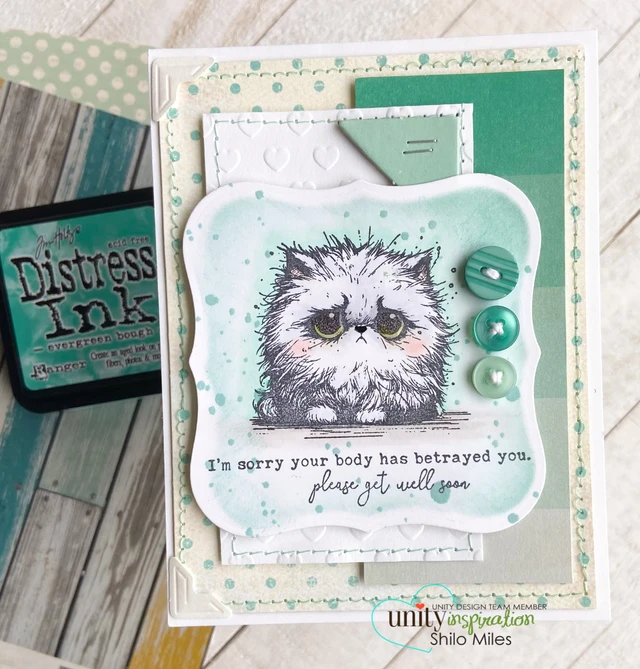
If your friendship runs on dark humor, A Little Not Fine has "I'm sorry your body has betrayed you." It names how unfair the thing is without getting sentimental, and to a lot of people that reads as more honest than a card full of flowers. Our Get Well Soon stamps run from that end of the range to the gentlest.
Inside, be specific about how you will show up. "I'm coming to your second appointment if you want me there." "I've got the group text, you don't have to update anyone." Close friends can make real promises. Make one you will keep.
Name the illness if they have named it to you; dancing around the word can feel strange between close friends. If you are not sure how public it is, leave it out. The card may sit on a counter where other people see it.
When a friend is newly diagnosed and you are not close
A coworker, a neighbor, someone from church. You want to acknowledge it, but a promise to stay by their side would be a strange thing to hear from you.
Keep it warm, short, and light on detail. Do not name the diagnosis unless they have shared it publicly. Do not ask questions. Do not promise anything you will not follow through on.
Doxie Apology
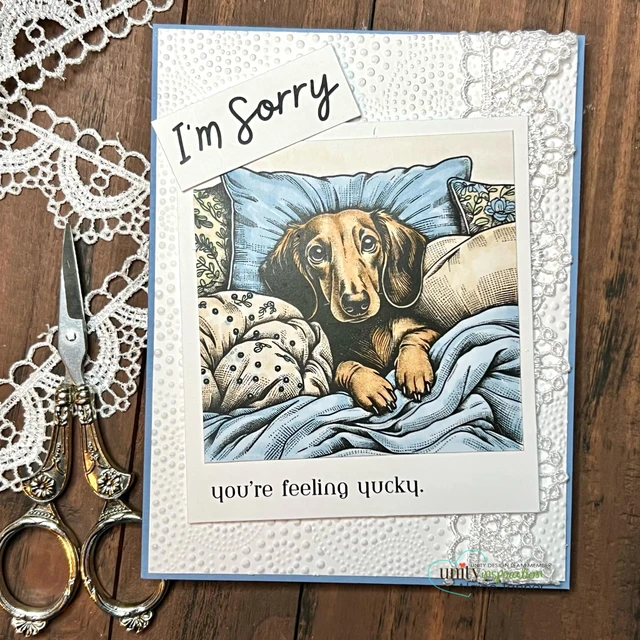
Doxie Apology works well here because its sentiments are made to combine: stamp "I'm sorry" above "you're going through a hard time". Kind, simple, and it does not overstep. Joy and Brighter Days is another good choice, a little wagon full of potted flowers with "sending you joy".
Inside: "Thinking of you and wishing you strength. No need to write back." That last sentence again. People who are sick get a lot of mail and feel they have to answer all of it.
Week three, not week one: writing after everyone else has stopped
People who have been through a long illness say the same thing over and over. The cards come in a flood the first week, and then they stop. By week three the casserole dishes have gone back and everyone assumes things are handled. That is when it gets lonely.
So if you missed the first wave, you are right on time for the more important one. And if you already sent a card, send another in a month.

Dog-Eared Days
The second card does not need to mention the news at all. Dog-Eared Days has "You've been on my mind", which is exactly the note for week three. Purr-Fect Time has "Just keep hangin on" for someone deep in a long stretch of treatment. And for the person who is tired of being strong, Hope Is A Beautiful Thing includes "be gentle with yourself you are doing your best".
A practical habit: when you hear hard news, make two cards instead of one. Mail the first now and put the second on your calendar four weeks out.
Who this is for: anyone on a long road. Chemo, rehab, a slow recovery, a long hospital stay.
For the caregiver rather than the patient
The husband sleeping in the hospital chair. The daughter driving her mom to dialysis three times a week. Everyone asks them how the patient is doing. Almost nobody asks how they are doing.

Serenity Circle
Serenity Circle, from our In the Light line, was made for this person: the one walking beside someone else through illness, addiction, or any long hard stretch. Two coneflowers, one blooming and one going to seed, and a sentiment that covers everything in four words: "here for you both".

Best Caregiver Ever
For someone caring for a parent or a spouse for the long haul, Best Caregiver Ever has "being a caregiver is a work of heart". The same set is the right one for thanking the home health aide or hospice nurse who looked after your family: "Thanks for taking such great care of our family".
Inside, ask about them, not the patient. "How are you holding up?" Then offer them an afternoon off, and mean it.
After a layoff or a job loss
Losing a job is a kind of grief people are not always allowed to have. It is money, routine, and identity all at once, and a lot of people feel embarrassed on top of it.
Do not open with "this could be a blessing in disguise." It may turn out to be one. It is too soon to say so.
The Little High Road
The best cards for this are not really job cards. They are cards that tell the person they are still capable and still themselves. The Little High Road ("life is tough but so are you") is a strong choice. So is Stay Strong, which has "Just breathe. You are strong enough". For the friend who is holding it together for the family, Coffee is Not Enough has "Just another day of keeping it all together".

Start Anew
A few weeks later, when they are starting to look ahead, Start Anew has "yesterday is heavy. put it down." Save that one. Sent the week of the layoff it can sound like "get over it." Sent a month later it sounds like permission.
Inside, offer one concrete thing you can really do. Read their resume. Introduce them to one person. Take them to lunch and do not talk about work.
For a divorce, a breakup, or a marriage ending quietly
However it ended, loudly or quietly, a marriage ending means grieving someone who is still alive, often while handling lawyers, kids, and a house. Do not take a side in the card, even if they have. Do not say you never liked the ex. Do not congratulate them unless they have told you it is a celebration.

Love Stays, No Matter What
The line we would reach for first is from Love Stays, No Matter What: "No matter how messy this feels, you are not too much for me". Divorce makes people feel like a burden and a disappointment at the same time, and that sentence answers both.

Don't Give Up
For someone still in the hardest part, Don't Give Up has "you are not alone". For someone further along, Hope Is A Beautiful Thing has "There are so many beautiful things waiting for you". And Start Anew's "yesterday is heavy. put it down." belongs here too, once they are ready to hear it.
Inside, tell them you are around for the ordinary stuff. Weeknight dinners, the first holiday, moving day.
Depression, anxiety and burnout
This one is different from a diagnosis or a layoff, because there is often no event to point at. Nothing happened. They are just underwater, and have been for a while, and the people around them have run out of ways to ask about it.
Two things to avoid. Do not treat it as a mood that a nice card will lift, and do not offer solutions. They have heard about the walk, the sunshine, the magnesium. What actually helps is a card that says: I see it, I am not frightened by it, and I am not asking you to do anything about it today.

Self Care Satire
Self Care Satire is the most useful set we make for this, and it works because it is funny without being dismissive. One stamp reads "Today's agenda: rest, hydrate, cancel everything". Another reads "Sending calm thoughts and permission to ignore everyone". Permission is the operative idea. A person in a burnout stretch is usually carrying a long list of people they feel they are letting down, and a card that takes one of them off the list is a real gift.

Time For a Pause
Time For a Pause is the gentler version of the same move: "You deserve a pause", and "Wishing you a little peace in your day".

Coffee is Not Enough
For the person who is functioning on the outside and exhausted underneath, Coffee is Not Enough has "Just another day of keeping it all together". That line names the performance without calling them out for it.
You Don't Have to Be OK
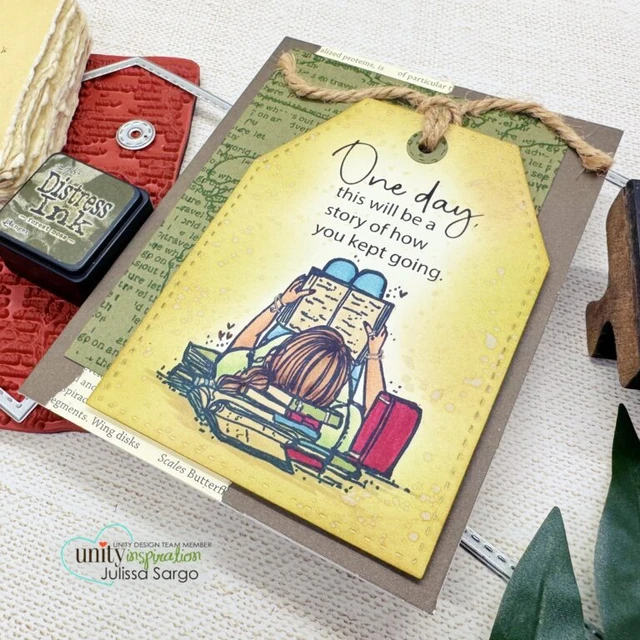
And from You Don't Have to Be OK, the line to use when someone is being asked to recover on a schedule: "You don't have to bloom today just keep breathing".

Hive Got Your Back
Hive Got Your Back is one stamp, a line of bees, and the words "Hive got your back". For a coworker or a friend you want to reach without making a whole occasion of it, that is often the right size.
Who this is for: the friend who has cancelled three times. The sibling who stopped answering the group text. The person you can tell is running on empty and who would be mortified if you made a fuss.
When nothing is technically wrong and everything is hard
There is a whole category of hard time that has no name and no casserole. The long grey stretch. The season where the job is fine, the family is fine, nothing has happened, and getting through Tuesday takes everything.
Nobody sends a card for this, which is exactly why one lands so hard.

A Little Not Fine
A Little Not Fine, our bestselling get well set, has the sentiment this section is built on: "i know you are fine totally fine absolutely fine but just in case you're a little not fine". It is the whole situation in one breath, including the part where the person keeps insisting they are fine. It is worth stamping on its own on a plain card front with nothing else competing with it.
A Little Ruffled
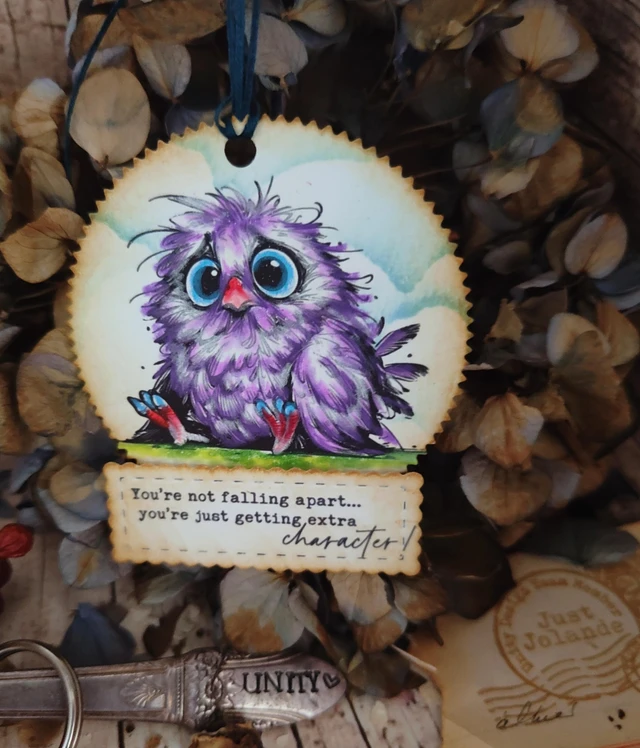
A Little Ruffled comes at it two ways. "Sometimes, we all feel a little ruffled" is the low-key version, good for someone you do not want to alarm. "You're not falling apart...you're just getting extra character" is for someone with a sense of humor about themselves.
Slightly Wry
Slightly Wry has a three word sentiment that covers a lot of ground with no diagnosis attached: "Feeling all the things".
Moo-ment by Moo-ment
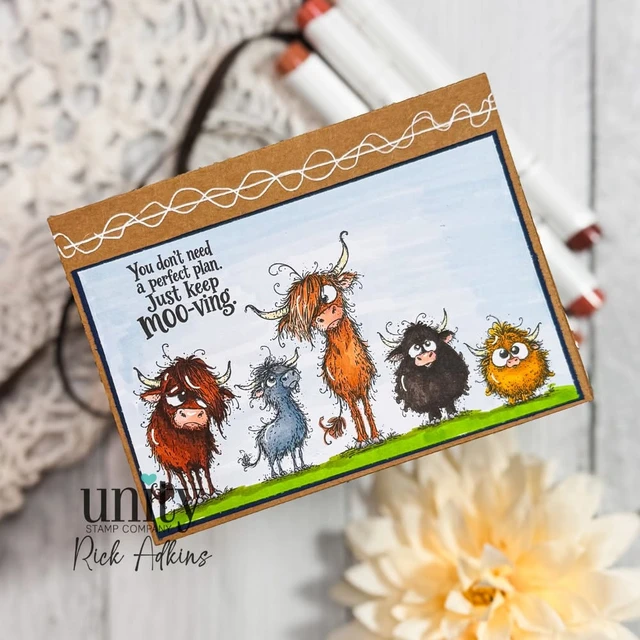
And Moo-ment by Moo-ment, for the person who feels behind on a life they never made a plan for: "You don't need a perfect plan. Just keep moo-ving."
Inside, resist the urge to ask what is wrong, because the answer is nothing and that is the problem. Try: "No reason. I was thinking about you and I wanted you to have something in the mail that was not a bill."
Who this is for: almost everyone, at some point. This is the card to send when you have no excuse to send one.
For someone facing the holidays alone or estranged
November and December are the hardest weeks of the year for people who are sick, grieving, newly divorced, far from family, or not speaking to them. The whole culture spends six weeks insisting that everyone is gathered around a table, and if you are not, the absence gets louder every day.
A card in the first week of December, to someone you know will be alone, is one of the highest value pieces of mail you will ever send. Send it early. The week between Christmas and New Year is very quiet for people on their own.
Do not write a standard holiday greeting. "Merry Christmas" to someone spending it alone can read as a description of what they are missing. Write something that acknowledges the season without insisting on it.
Hope in the Heavy
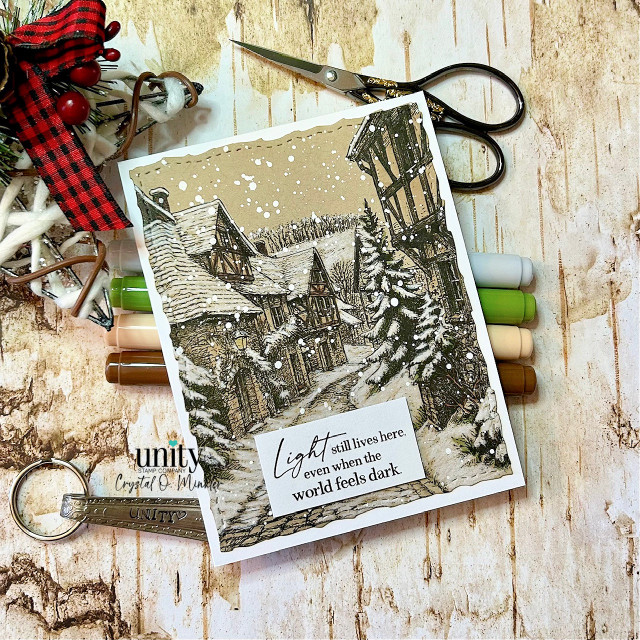
Hope in the Heavy, from our In the Light line, is the set for this. "Light still lives here, even when the world feels dark" works in December without being a Christmas card. So does "When the world feels heavy", and "May love be the thing that lifts you".

A Light to Weather By
A Light to Weather By is the more formal version: "May a steady light guide you through this difficult time."


Keep Shining Sweet Friend
Keep Shining Sweet Friend is a single stamp with a single line: "Keep Shining, sweet friend. The world needs your light." It is an easy one to keep a few of.

Extra Love Pup
And Extra Love Pup has the most direct version of the message: "I heard you needed a little extra love today".
Inside, name the day if you can. "Thinking of you on Thursday." Being thought of on the actual day is the part that counts.
Who this is for: the widow in her first December. The friend whose divorce went through in October. The coworker who never goes home for the holidays and never says why.
When they are far away and you cannot show up in person
You would bring soup if you lived closer. You do not. The distance makes people feel useless, and useless often turns into silence, which is the one thing that actually makes it worse.
Mail is the answer here, and not because we sell stamps. A text disappears into a stack of other texts. A card sits on a counter for three weeks and gets looked at every time they walk past it. When you cannot be in the room, the object is the next best thing, and it is a long way ahead of third best.

{There}
{There} is the set built for this, and it works differently from the others. It is a kit of separate word stamps that combine: "There", "wish I were", "in spirit", "always gonna be", "for you", "Hello", "hey", "is always tomorrow", "is beauty in struggle". You build the line you need out of the pieces, which means one small set covers a lot of distance, including a few sentences you could not buy pre-made anywhere.

Flock Talk
Flock Talk has the ready-made version: "We flockin' miss you", and "Hello, from the flock", which is the right one when a group of you is sending together.

Feeling Off
Feeling Off has the plainest line of the lot: "I just miss you so very much". And Dog-Eared Days has "You've been on my mind", which needs no explanation and no follow-up. Browse the rest of our Thinking of You stamps for more.
Inside, be concrete about the distance instead of apologizing for it. "I can't drive you to anything from here, so I'm going to write to you instead. Expect mail." Then actually send the second one.
Who this is for: the college friend three states over. The cousin overseas. Your mother, when you moved away and she got sick.
When you are months late, and why late is still worth sending
You meant to send it in March. It is now September. The card has been on your desk the whole time, and every week that passes makes it more embarrassing, until the embarrassment itself becomes the reason you never send it.
Send it. Almost nobody is keeping score, and the ones who are will be glad to hear from you anyway. A late card carries information a prompt one does not: that you were still thinking about it months later, when everyone else had moved on. The week three section above makes this case for week three. It holds at month six too.
Do not spend the card apologizing. One line, then move on to the actual message.

A Little Ruffled
A Little Ruffled has the sentiment for it: "Dang it! I'm late again". Stamp it on the front, get the apology out of the way in four words, and use the inside for something real.

Doxie Apology
Doxie Apology is built to combine, which suits this exactly. Stamp "I'm sorry" above "you're going through a hard time" and you have covered both the lateness and the reason in one small card.

Could Be Better
If your friend would rather be teased than apologized to, Could Be Better has "I'm too busy for more than one card this year".

Dog-Eared Days
And Dog-Eared Days has the line that makes lateness beside the point entirely: "You've been on my mind".
Inside: "This has been on my desk since March, which tells you how often I think about you and how bad I am at mailing things. How are you now?" That last question matters. A late card should ask about the present, not the thing that happened.
When making them laugh is the kindest thing you can do
Reread the section on softness versus normal before this one. Humor sent to the wrong person, or at the wrong moment, is worse than no card at all. But sent to the right person, it is the best thing in the mailbox that week, and it is the one kind of card that nobody else is sending them.
Here is why it works. A sick person is surrounded by people using their careful voice. Hushed tones, tilted head, the hand on the arm. After a few weeks of that, a card that makes them laugh out loud is not a break from being cared for. It is proof that somebody still sees a whole person in there.
The rule is simple: joke about the situation, never about the person. Their body, their luck, the hospital food, the parking, the insurance company, all fair. Them, no.

Trash Panda
Trash Panda does this better than anything else we make. "Just a little feral support" for the small version, and "If anyone can survive this much garbage & still look cute, it's you" for the full one. There is also "Sending you love because what a shit show", which is for the friend who swears at the kitchen table.
A Little Not Fine
A Little Not Fine has the line people quote back to us most: "I wish I could take your pain away and give it to someone we both hate". That sentiment is doing something a soft card cannot. It says the situation is unjust and that you are angry about it on their behalf.

Could Be Better
Could Be Better is the set for a friendship that runs on deadpan: "Get better soon. I know you are not sick but I think you could be better", and, for a person drowning in thoughts and prayers, "You need more than prayers".

Leave Me Alone
Leave Me Alone is the one for an introvert in week two of being fussed over: "You look like you need soup, naps, and everyone to leave you alone".

Sorry Stuff Stinks
Sorry Stuff Stinks keeps it to three words, "sorry stuff stinks", with "For the record, you don't stink" as the follow-up gag inside.

You Exhaust Me
And You Exhaust Me has a quiet one that gets overlooked: "Sorry you're dealing with this".
If you are unsure, pick the mildest funny option and put a sincere line inside. The combination of a joke on the front and one true sentence inside is close to unbeatable. If your people run on this kind of humor, our Snarky Birthday Wishes are written for the same crowd, and the full range of Get Well Soon stamps has more.
How to close the card, and the sign off problem
People write a good card and then freeze at the bottom of it. "Love" feels like too much for a coworker. "Sincerely" feels like a bank letter. "Best" feels like nothing at all.
A few that work, roughly from warmest to most reserved:
- Love always, or All my love. Close family, closest friends.
- With love. Warm, and safe for a wider circle than people expect.
- Thinking of you. Works for anyone and repeats the message one last time.
- Here for you. Only if it is true and you will act on it.
- Your friend always. Good for an old friendship that has gone quiet.
- Warmly, or Take care. Coworkers, neighbors, church, anyone at arm's length.
Two rules. Do not close with a question, because it turns the card into an obligation. And do not close with "Get well soon" on a card to someone who is not going to get well soon. For a chronic condition, a terminal diagnosis, a divorce or a layoff, that sign off is a small wound. "Thinking of you" carries no such assumption and never goes wrong.
If the sign off still feels thin, let the stamp do it. Stamping "i'm here" (A Little Not Fine) under your name is a closing line, and it is a stronger one than anything you will talk yourself into at the bottom of the card. From Extra Love Pup, "Bad days happen. I'm right here" does the same job.
What the stamp says versus what you write by hand
The most common mistake is making the stamped sentiment and the handwritten note say the same thing twice. If the front says you are thinking of them, do not open the inside with "I have been thinking of you."
Think of it as a division of labor. The stamp handles the feeling, which is the part that is hard to write. Your handwriting handles the specifics, which are the part only you can supply.
That split is why a stamped card outperforms a store-bought one with a printed verse. The printed verse does both jobs and leaves you a half inch to sign your name. When the sentiment is stamped where you choose to put it, the rest of the card is yours.
What belongs in your handwriting:
- One detail only you would know. The dog's name. The road they live on. The thing they said last spring that you still think about.
- One concrete offer, with a day attached.
- One sentence that says you are not going anywhere.
That is three sentences. Three sentences in your own handwriting under a stamped line is a better card than a page of careful paragraphs, and it is far likelier to actually get sent.
One practical note. If your handwriting is going to sit right under the sentiment, stamp the sentiment higher on the card than feels natural. People run out of room on hard cards more often than on happy ones, because they have more to say than they expected.
Building the card around the sentiment
Most people pick a pretty card and then hunt for words to fit it. For a hard card, do it the other way around. Choose the sentence first. The card is a delivery system for that sentence, and every other decision gets easier once it is settled.
Once you have the line, four decisions:
- White space. Hard cards want more of it than happy ones. A single line in the middle of an empty front reads as serious and considered. A busy, layered front reads as a craft project, which is not the note you want when someone has just had bad news.
- Ink color. Black or a deep neutral for serious messages. Save the bright colors for the funny cards, where they are doing real work.
- Scale. Small sentiments like "i'm here" or "consider this a hug" get stronger the more space you leave around them. Do not crowd a two word sentiment.
- Contrast. Our stamps are red rubber on black cling foam, and the rubber gives a cleaner impression on fine detail, so the small script sentiments hold up on textured and handmade papers. Press evenly and lift straight up.

{There}
Sets that combine are worth calling out here, because they change what you can say. {There} is a kit of separate word stamps rather than finished sentences: "There", "wish I were", "in spirit", "for you", "always gonna be", "hey". Stamp "wish I were" and then "There" and you have written a line that is not available on any pre-printed card, in your own arrangement, in about fifteen seconds. Doxie Apology works the same way, with "I'm sorry" over "you're going through a hard time" or over "you're feeling yucky".
The sentence you needed for this one person on this one week usually does not exist as a product. Built out of pieces, it does.
Keeping a few made up before you need them
This is the most useful habit on this page, and it is the one nobody tells you.
Bad news arrives on a Tuesday night. If you have to buy a card, find a stamp, ink it, wait for it to dry and find a stamp for the envelope, the card goes out ten days later, or never. If you have four blank-inside cards in a drawer, it goes out Wednesday.
Make four at a time when you are already at the table for something else. Stamp the fronts, leave the insides empty, and put them in a drawer with envelopes. Four covers most of what a year throws at you:
- One that says you are there. "i'm here" (A Little Not Fine).
- One that is gentle. "You deserve a pause" (Time For a Pause) or "I heard you needed a little extra love today" (Extra Love Pup).
- One that is funny. "Just a little feral support" (Trash Panda) or "sorry stuff stinks" (Sorry Stuff Stinks).
- One that fits almost anyone. "life is tough but so are you" (The Little High Road), our bestselling encouragement stamp, or "Hive got your back" (Hive Got Your Back).
Leave them unwritten. The whole point is that the words go in on Wednesday morning, once you know what happened. If you want to stock the drawer, our Encouragement stamps are the place to start.
Keep stamps for the envelopes in the same drawer. That is the step that actually stops people.
Common questions
What do you write in an encouragement card when you do not know what to say?
Three sentences. Name that it is hard without describing it, say you are thinking of them, and say one specific thing you will do. "I heard, and I'm so sorry. You've been on my mind all week. I'm dropping soup on your porch Thursday." You do not need to be wise. You need to be there.
What should you never write in an encouragement card?
Anything starting with "at least." Silver linings. Advice about doctors, diets or supplements. Stories about someone else who had the same thing. "Stay positive." Questions that require an answer. And "let me know if you need anything" with no real offer behind it.
What is a short encouragement message for a card?
Short works: "i'm here", "consider this a hug", "It's okay to not be okay", "You've been on my mind", "Hang in there". Each of those is a sentiment we print on a stamp, and each leaves room inside for one handwritten line, which is the part they will reread.
Should I mention the illness by name?
If they told you directly and you are close, yes. Dancing around the word can feel strange between close friends. If you heard it secondhand, or you are not sure how public it is, leave it out. Cards sit on counters where other people see them.
What do you say to someone going through chemo?
Say less than you think, and say it more than once. Treatment runs in cycles and the hard days are predictable, so a card that arrives in week three or week eight is worth more than a longer one in week one. Do not ask for a progress report and do not require a reply. "Just keep hangin on" and "You don't have to say a word, I know this is hard, and I'm here" are both sentiments we print, and both are written to take the pressure off.
What do you write to someone who is going through a hard time but has not told you what it is?
Acknowledge, do not diagnose. "Sorry you've been feeling off..." is a printed sentiment that does this well, because it leaves the door open without pushing on it. Inside: "No need to explain. I just wanted you to know I'm thinking about you."
Is it okay to send a funny get well card?
Yes, if you know the person. A sick person is surrounded by careful voices, and a card that makes them laugh proves somebody still sees a whole person. Joke about the situation, never about the person. If you are not sure how they will take it, pick the mildest funny option and write one sincere line inside.
Is it too late to send a card?
No. People say the cards flood in the first week and stop by the third, which is when it gets lonely. A card at week three, or month six, carries something a prompt one cannot: that you were still thinking about it after everyone else moved on. Apologize in one line, then ask how they are now.
What do you write to someone who lost their job?
Not "this could be a blessing in disguise," however true it turns out to be. Write something that says they are still capable and still themselves, then offer one concrete thing: read the resume, make one introduction, buy lunch and do not talk about work. "life is tough but so are you" is the line we would reach for first.
What do you say to a caregiver?
Ask how they are, not how the patient is. Everyone asks them the second thing and almost nobody asks the first. Then offer them an afternoon off and mean it. "here for you both" is a sentiment we print for exactly this person.
Related guides
If you are writing after a death, see what to write in a sympathy card. For the other occasions, the full set of guides is on our Card Ideas and Sentiments page.
Nic Magnuson runs manufacturing at Unity Stamp Company, a family-owned stamp maker in New London, Minnesota, where every stamp is made in-house in red rubber. This page is updated every year.